Richard Florida

Posted March 12, 2008 by Chris
Categories: Books I'm Reading, Creativity, Cultural Ideas, Influence

richard_florida_sitting.jpg

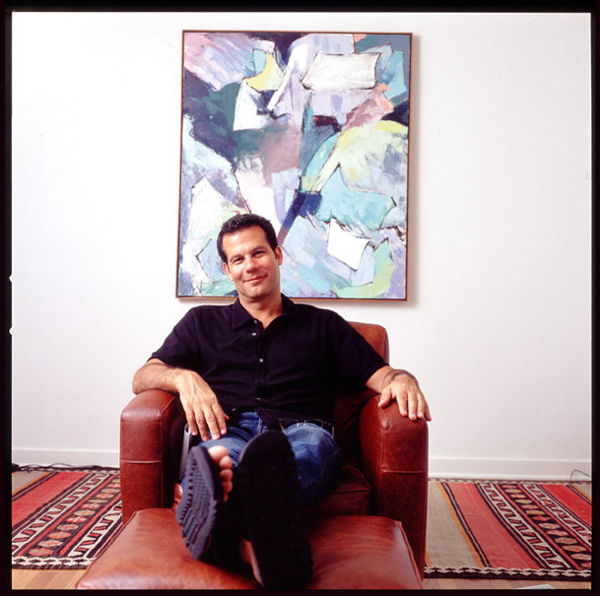
Richard Florida is the guru of the Creative Class. His book, The Flight of the Creative Class, has opened up a new way of looking at what being creative means for more than just the individual. The book discusses the “global competition for talent” and offers ways the United States can compete.

What I really like is his new book, Who’s Your City. In this book he discusses the attitude that “cities should focus on attracting high-paying, attractive jobs. Economic growth and a thriving jobs market would attract the best talent, right? Wrong. It turns out that it’s more important for cities to focus on creating a strong, diverse talent base. By fostering a strong creative class, cities are assured of future economic growth and prosperity.”

In an interview Florida also says something that needs no more interpretation than to simply read it:

“Talent and creativity do not reside in the individual. They reside in the relationship.” Think about that one for awhile.


Jeffrey Sachs

Posted March 11, 2008 by Chris
Categories: Books I'm Reading, Cultural Ideas, Influence

sachs.jpg

Jeffrey Sachs is the author of The End of Poverty – which you should read if you haven’t, you should. His new book, Common Wealth, is like a textbook for the world.

In the book he lists four major things that need to be done in order to prevent a global economic meltdown.

1) Environmental Sustainability

2) Stabilization of the world’s population

3) The end of extreme poverty

4) Effective global cooperation

Despite the doom and gloom feel you could get from the title and index, the book itself is very readable and provides real optimism for both individuals and governments if the paths offered are followed.

Sustainability

Posted March 10, 2008 by Chris
Categories: Influence

A lot of talk is going around about sustainable this and sustainable that. Most of the conversation centers around the unbiased “greening” of everything from cars to toilet paper. Some of this is done for good reason, and some are simply jumping on the wagon before they are labeled environmentally unfriendly.

I think of sustainability as something that will remain. A couple of days ago I wrote about the desire of Thom Browne to accomplish at Brooks Brothers things that would outlive his time there. This idea has to e the center of the conversation when we talk about influence. The influencers in any organization or people group are those who do more than sway popular opinion. They are those whose ideas are adopted and made part of the culture of a group or organization.

We must seek to do more than change a mind – we must seek to change THE mind of the organization or culture so that our ideas last longer than we do.

Meg Whitman

Posted March 9, 2008 by Chris
Categories: Cultural Ideas, Influence

megwhitman.jpg

Since 1998, Meg Whitman has been at the helm of eBay as CEO. In her early days as CEO of the company, Meg stated that a CEO should not serve for longer than 10 years. With her own 10th anniversary coming up, people are wondering what she will do. Speculation serves no ones interest, but contemplation does.

The fascinating idea of a CEO only needing to serve for 10 years is something that deserves much more space than I can give it, but I can offer a few ideas.

One: Setting a timetable for ones leaving gives a sense of urgency to unfulfilled desires and obligations to be performed before leaving. The result would be increased focus and, understandably, increased results.

Two: Knowing when you will vacate a position, puts you in a marvelous spot for having time to find a replacement and allows for the company itself to not miss a beat recovering from a surprise exit and subsequent shell-shock.

Three: Perhaps the greatest aspect of having a path set for going off the company stage is that you as CEO can actually enjoy your position. You are not trying to “hold on” to power. You and everyone else knows when you will be going and  so the temperature on the corporate side should be relatively cooler than if no one knew.

Some things to ponder and think about while we all wait and see what Meg will actually do.

Thom Browne

Posted March 8, 2008 by Chris
Categories: Cultural Ideas, Influence

1521361751_56128e7235.jpg

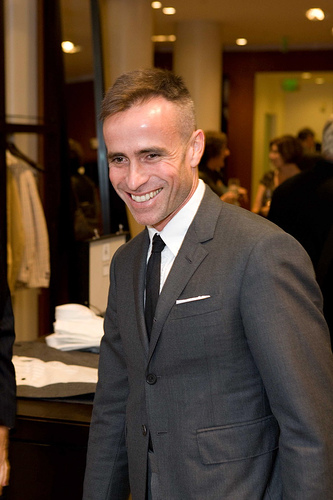
Here is the second in a short list of people who are doing things that are bringing success to their companies and pushing design and innovation further. Thom Browne is a Guest Designer for the clothing classic, Brooks Brothers. His take on what he can bring to the company, I think, mirrors the attitude that we should have in all of our endeavours in life – be them business, personal or spiritual.

He says, “I signed on to do four seasons, but it is important to do something that isn’t going to just be around for a couple of years, then gone. I want to establish something that can live on past my involvement in it.”

This should be the cry of all who consider influence an important aspect in working and relating to others. The influence that we want is not a flash in the pan act. It has to resonate far beyond an individual occasion or action. Influence has to continue beyond our individual involvement and toward the establishment of a mark that is made and lasts.

Patrick Robinson

Posted March 7, 2008 by Chris
Categories: Belief, Cultural Ideas, Influence

patrick-robinson.jpg

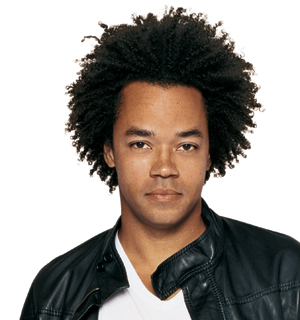
For the next few days I want to spotlight a few people you may not have heard of that are on  the edge of innovation and design in popular culture. The first one is Patrick Robinson. He is the Executive Vice President of Design at GAP. The company has been off and on for the past several years, but the key is the approach that Patrick puts into his mission.

The point is that GAP should be providing classic American clothing. He says “the true indicator of success is getting people excited when they come to the store and having them walk out with a shopping bag.”

He is talking about true design buy-in. If we want to have influence in our culture we must also seek true buy-in by those we want to influence. If we simply present a good idea, but their is no take-away, we have failed. If I have a tremendous display of product or idea information, but you leave with a “I’ll think about it”, I have failed.

The key to sustainable influence is excitment that leads to commitment, ie. (excited when they come in and a shopping bag when they walk out). 

Knowing When to Say “When”

Posted March 6, 2008 by Chris
Categories: Context, Cultural Ideas, Influence

brett_favre.jpg

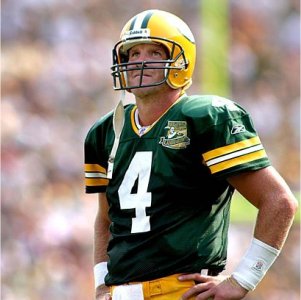
Well, it finally happened. Brett Favre has retired. Only time will tell if it is permanent, but from what I’ve seen, it looks to be the end of an era. Knowing how to stop is just as important as knowing when to begin. Before there are book out about how he should quit,  how he has played beyond his time or how his staying in the game has brought his team down, Brett has chosen to step aside.

There will be plenty of people who will want to find a “reason” why. They will point to him being pushed out by Green Bay, how that “had” to be how it happened – I don’t think so.

Brett is one of my favorite guys in professional sports because he is grateful to what the sport has meant to him, but he is not over enamored by his own mythology. I doubt we will see him quickly step up to become a commentator on a network like others have done.

I like Brett because he seems to be more at home in Mississippi than in Green Bay. He is talented – no doubt to that – but the talent hasn’t made him into an egomaniac. He presents an example to all of us who seek to do “great things”.

When we achieve those “great things” fame is often thrust upon us, but the true revelation of a persons greatness is not in the things they have done, but in the way they respond to greatness. If you have not prepared as to how and what you will do when greatness comes, the onslaught of fame can become a curse.

Always remember that famous people are not often truly great, and truly great people are not often famous, but when the two converge you often have a modern iconoclast – someone who leads by breaking the mold and exhibiting facets of character that transcend the normal and pave the way to a new definition of what it means to be great. 

We Love an Underdog

Posted March 5, 2008 by Chris
Categories: Cultural Ideas, Influence

cklein_1112.jpg

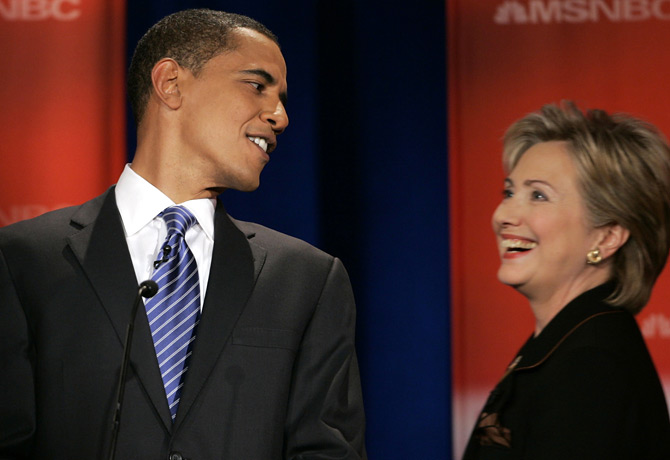
With all of the political talk going around, it is impossible not perceive someone as the underdog. Americans love the underdog. Maybe because as a country we were an underdog in taking on the British, maybe it’s because many who came to this country during the first floods of immigration were, in their own countries, underdogs. Whatever the case, nothing gets our emotions going more than to have a public race that includes an underdog.

The interesting thing is that a person or cause can move from front-runner status to become an underdog almost overnight. With the flood of instant information and blogs going straight to your in-box, your opinion can change about a candidate or issue rather quickly. Such it has been in the Democratic race for the nomination. Both candidates have tasted the cool wind of the front-runner and the bitter dust of the underdog.

Considering the race is nowhere near over it will be a sure bet that roles will change. When the nominations are set in several months the roles will begin again adding John McCain to the roll call.

What can we learn from this? I think we can settle in the fact that in out lives we may face being an underdog at times, but the wave of popularity will come round again and we will find ourselves afloat, at the front of the pack. Never underestimate the underdog, but don’t despair if it happens to be you. 

“Hold on Loosely”

Posted March 4, 2008 by Chris
Categories: Belief, Context, Cultural Ideas

wild-eyed-southern-boys.jpg

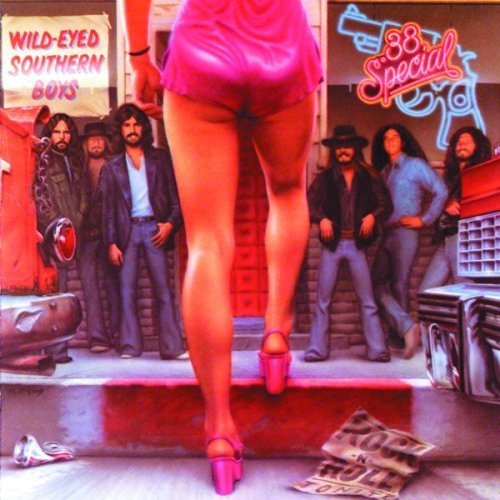
38 Special had a song on the 1980 album, Wild-eyed Southern Boys, titled “Hold On Loosely”. I heard this song on the radio a few days ago and it has stuck with me. If you’ve been reading the blog, you know that one of the areas I am drawn to is the connection between traditional Christianity and its transition into the post-modern world. Specifically, the way that certain aspects of the religion are being augmented, jettisoned or distinctly transformed from their pre-modern, Enlightenment Era definitions.

This song describes, for me, the context with which we must hold all religious beliefs. In one part of the lyrics the song says, ” Just hold on loosely, but don’t let go / If you cling to tightly, /you’re gonna lose control.” Definitely a thought worth pondering in relation to religion and the give/take struggle we often face.

We must hold on to our beliefs, but not so tightly that when it becomes apparent our beliefs contradict truth and reality we find it difficult or impossible to let go.  This is not to say that faith has no place – it certainly does – but only when the faith is based on truth. So-called “blind-faith” is no faith at all.

Ben Franklin

Posted March 3, 2008 by Chris
Categories: Context, Cultural Ideas, Influence, Strengths

signature.jpg

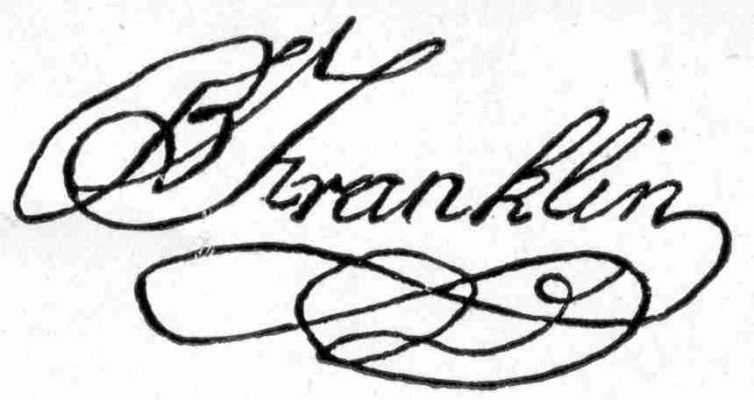
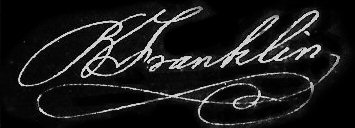
“The sting of rebuke is the truth.” These words were spoken by Ben Franklin and could not be more true today than they were back in the infancy of the American nation.

Rebuke is something none of us like. To be told we are wrong offends our ego and bruises our pride. However, like Franklin stated, when the comments carry the ring of truth, their pain seeps deeper into our being. We know our own mistakes and hidden failings; and often seek out ways of burying them in the dust of time. When a fault or character flaw – specifically one we thought we had dealt with – is pointed out by a friend or colleague, there is a pain that defies explanation.

The true response can only be honesty at our personal lack and a resolve to continue working on the issue or problem. The great thing about we humans is that we were not created perfect, nor can we be. As the saying goes, “to err is human” is correct. Our imperfections display our beautiful humanness.

Ben had his own issues, but we still choose to remember him as a great American statesman. If you fail, choose to remember the “great” things about you, and if someone close to you fails, choose to remember and help them to remember the beauty of our frailty and their “great” moments as well.