Archive for the ‘Cultural Ideas’ category

Jung

March 23, 2008

jung-1.jpg

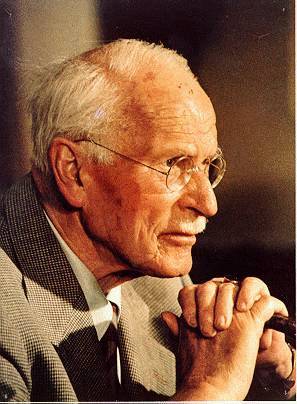
“What you resist, persists.” That was spoken by Carl Jung, one of my favorite people. I know some would question, but I really do enjoy reading about Jung and the perception he had on life and the formation of our inner person.

This quote resounds with me. When we focus our attention on negative things, we find ourselves surrounded by more of the same. When we strive and put forth all our effort in one direction against one idea or issue, it seems that the idea or issue grows in magnitude right before our eyes.

Have you wanted to start eating healthy, and as soon as you make “the commitment” every fast food chain suddenly comes out with brand new sandwiches? You finally decide you need to start saving money, and as quick as you deposit the first bit into your savings, the greatest sale is announced. Do you find yourself asking – “What gives?”

Instead of focusing our interest on the negative, put the positive in front of your eyes and center on those things.

It has been said that energy flows where attention goes. If you want the negatives to have energy and momentum in your life  – put those things in front of you, but if you want the positive actions and issues in your life to grow and become energized – put the spotlight on them and see what happens.


“Love”

March 22, 2008

In the church world, it is easy to continually ruminate over the ins  and outs of dogma and theory. We can find ourselves questioning this and that, but never asking what are perhaps the better questions. Tons of paper has been used to print volumes of commentaries on Scripture. Men have made their lives work a quest to finish a complete observation and interpretation of what they think the authors meant.

 I was listening to Dennis Miller yesterday, and he quoted Bill Hicks as saying, “Never trust a man who begins his sentence by saying,’I think what Jesus was saying here was…’ ” I thought that was right on. Even though I’ve spent a great amount of time reading and a lot of money purchasing those same commentaries, the ultimate point of decision must lie with me.

When I read scripture – at least currently – I keep coming back to the place where the Pharisees ask Jesus which commandment is the greatest. Jesus had a wealth of both oral and written tradition to choose from. I still find myself feeling a little amazed that he comes back with “love”, as in “love your neighbor as yourself”. He says that we should love God, but He makes a point to identify loving each other as paramount.

Over the past few months I have parked here often and pondered over the little word “love”. So much is contained in those four letters. To be a people who follow the teachings of Jesus – whatever else we differ on, we cannot differ on the issue of love.

How to be a Great Leader

March 15, 2008

20060920-figures_leader.jpg

I couldn’t resist that title. There are probably a hundred books with at least that concept in the title. Most of them I’ve read, but here is a fact I thought timely.

Next week we will start a new series called, FAQ. We will look at the relevance of having 100% of the information for making decisions. Truth is even if you waited around for a very long time you would never have 100% of the information about anything.

In the Journal of Leadership and Organizational Studies, Michael Harvey wrote that curiosity is a trait that “stimulates learning and concurrently, increases the effectiveness of decision making and quality management in the global marketplace.” It seems that leaders with a bend toward the curious succeed at problem solving by “filling in the gaps between what one knows and what one wishes to know.”

This is where the joy and mystery live. Between what we know and seek to know is where we tend to find ourselves most often anyway. The ability to fill this gap with real life and following our intuition/spirit, I believe is the cornerstone to a well-lived life.

Checklist

March 14, 2008

checklist.jpg

This may seem like a mundane word, but it provides access to some amazing and interesting bits of food for thought. The biggest point to make is that to avoid blind spots institute checklists.

Hospitals use checklists to save lives every time they insert an IV line. Checklists give people the best way to do things – a clear cut “right way”.

In any business we do certain things over and over. Through the passage of time a certain amount of overconfidence can cause us to do things without thinking – think of the rate of auto accidents near to home; a route we take over and over and soon do as second nature.

Even when we do institute an actual checklist in situations we have to be wary of checklist creep. We have to discipline ourselves not to short change a working system.

To be candid, when we use checklists we make fewer mistakes. We all have things we do over and over again.  Take these things and put them in checklist form. This is the one sure fire way to eliminate at least some of the blind spots we all share.

Richard Florida

March 12, 2008

richard_florida_sitting.jpg

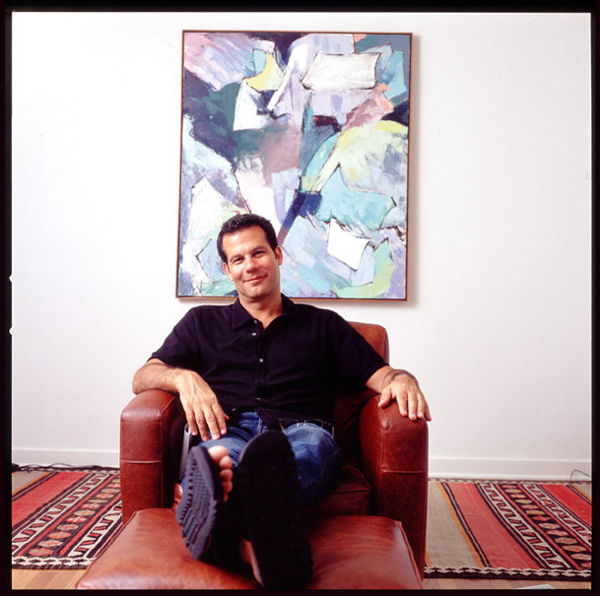
Richard Florida is the guru of the Creative Class. His book, The Flight of the Creative Class, has opened up a new way of looking at what being creative means for more than just the individual. The book discusses the “global competition for talent” and offers ways the United States can compete.

What I really like is his new book, Who’s Your City. In this book he discusses the attitude that “cities should focus on attracting high-paying, attractive jobs. Economic growth and a thriving jobs market would attract the best talent, right? Wrong. It turns out that it’s more important for cities to focus on creating a strong, diverse talent base. By fostering a strong creative class, cities are assured of future economic growth and prosperity.”

In an interview Florida also says something that needs no more interpretation than to simply read it:

“Talent and creativity do not reside in the individual. They reside in the relationship.” Think about that one for awhile.

Jeffrey Sachs

March 11, 2008

sachs.jpg

Jeffrey Sachs is the author of The End of Poverty – which you should read if you haven’t, you should. His new book, Common Wealth, is like a textbook for the world.

In the book he lists four major things that need to be done in order to prevent a global economic meltdown.

1) Environmental Sustainability

2) Stabilization of the world’s population

3) The end of extreme poverty

4) Effective global cooperation

Despite the doom and gloom feel you could get from the title and index, the book itself is very readable and provides real optimism for both individuals and governments if the paths offered are followed.

Meg Whitman

March 9, 2008

megwhitman.jpg

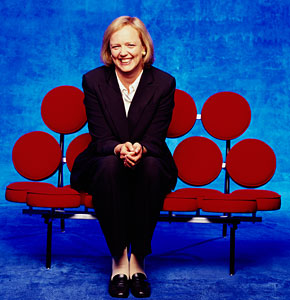
Since 1998, Meg Whitman has been at the helm of eBay as CEO. In her early days as CEO of the company, Meg stated that a CEO should not serve for longer than 10 years. With her own 10th anniversary coming up, people are wondering what she will do. Speculation serves no ones interest, but contemplation does.

The fascinating idea of a CEO only needing to serve for 10 years is something that deserves much more space than I can give it, but I can offer a few ideas.

One: Setting a timetable for ones leaving gives a sense of urgency to unfulfilled desires and obligations to be performed before leaving. The result would be increased focus and, understandably, increased results.

Two: Knowing when you will vacate a position, puts you in a marvelous spot for having time to find a replacement and allows for the company itself to not miss a beat recovering from a surprise exit and subsequent shell-shock.

Three: Perhaps the greatest aspect of having a path set for going off the company stage is that you as CEO can actually enjoy your position. You are not trying to “hold on” to power. You and everyone else knows when you will be going and  so the temperature on the corporate side should be relatively cooler than if no one knew.

Some things to ponder and think about while we all wait and see what Meg will actually do.

Thom Browne

March 8, 2008

1521361751_56128e7235.jpg

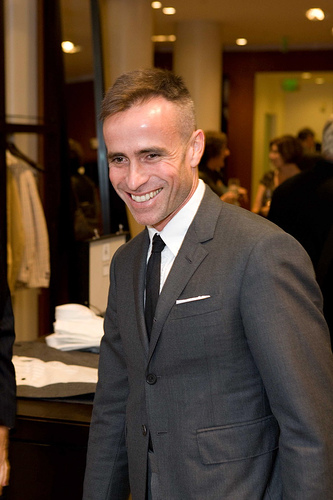
Here is the second in a short list of people who are doing things that are bringing success to their companies and pushing design and innovation further. Thom Browne is a Guest Designer for the clothing classic, Brooks Brothers. His take on what he can bring to the company, I think, mirrors the attitude that we should have in all of our endeavours in life – be them business, personal or spiritual.

He says, “I signed on to do four seasons, but it is important to do something that isn’t going to just be around for a couple of years, then gone. I want to establish something that can live on past my involvement in it.”

This should be the cry of all who consider influence an important aspect in working and relating to others. The influence that we want is not a flash in the pan act. It has to resonate far beyond an individual occasion or action. Influence has to continue beyond our individual involvement and toward the establishment of a mark that is made and lasts.

Patrick Robinson

March 7, 2008

patrick-robinson.jpg

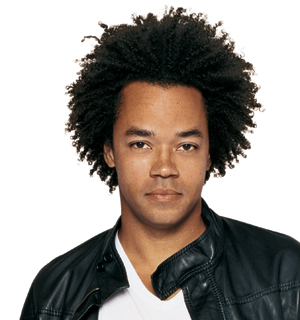
For the next few days I want to spotlight a few people you may not have heard of that are on  the edge of innovation and design in popular culture. The first one is Patrick Robinson. He is the Executive Vice President of Design at GAP. The company has been off and on for the past several years, but the key is the approach that Patrick puts into his mission.

The point is that GAP should be providing classic American clothing. He says “the true indicator of success is getting people excited when they come to the store and having them walk out with a shopping bag.”

He is talking about true design buy-in. If we want to have influence in our culture we must also seek true buy-in by those we want to influence. If we simply present a good idea, but their is no take-away, we have failed. If I have a tremendous display of product or idea information, but you leave with a “I’ll think about it”, I have failed.

The key to sustainable influence is excitment that leads to commitment, ie. (excited when they come in and a shopping bag when they walk out). 

Knowing When to Say “When”

March 6, 2008

brett_favre.jpg

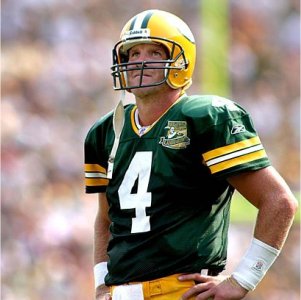
Well, it finally happened. Brett Favre has retired. Only time will tell if it is permanent, but from what I’ve seen, it looks to be the end of an era. Knowing how to stop is just as important as knowing when to begin. Before there are book out about how he should quit,  how he has played beyond his time or how his staying in the game has brought his team down, Brett has chosen to step aside.

There will be plenty of people who will want to find a “reason” why. They will point to him being pushed out by Green Bay, how that “had” to be how it happened – I don’t think so.

Brett is one of my favorite guys in professional sports because he is grateful to what the sport has meant to him, but he is not over enamored by his own mythology. I doubt we will see him quickly step up to become a commentator on a network like others have done.

I like Brett because he seems to be more at home in Mississippi than in Green Bay. He is talented – no doubt to that – but the talent hasn’t made him into an egomaniac. He presents an example to all of us who seek to do “great things”.

When we achieve those “great things” fame is often thrust upon us, but the true revelation of a persons greatness is not in the things they have done, but in the way they respond to greatness. If you have not prepared as to how and what you will do when greatness comes, the onslaught of fame can become a curse.

Always remember that famous people are not often truly great, and truly great people are not often famous, but when the two converge you often have a modern iconoclast – someone who leads by breaking the mold and exhibiting facets of character that transcend the normal and pave the way to a new definition of what it means to be great.