Pillars Part 5

Posted August 31, 2008 by Chris
Categories: Belief, Context, Life, Message Series, religion

This week the focus of our teaching was the discipline of the study of Scripture. One of the key verses mentioned was Prov. 4:20-22. This talked about the words being given to us equating to life for our bodies. This is an analogy echoed by Christ in the New Testament when He proclaimed that “Man cannot live by bread alone”, that man needed to also partake of “the Word of God”.

To me a perspective shift is in order for us to truly understand all that is taking place when we enter into the discipline of study. First, we have mental focus, much the same as during meditation. Our focus for a period of time is on a portion of scripture. Layer after layer we look at what the words mean to our current context in terms of description and action. Secondly, there is a sort of fast going on. Instead of indulging in something else we have chosen to spend time looking into scripture.

Thirdly, and most importantly, we are not on a search for answers to our questions. There is no promise in scripture that we will know every answer for every question. Yes, there are certainties, but these certainties are far fewer than the traditional fundamentalist would like to admit. Let’s face it, if the real answers to all of man’s problems were found in scripture don’t you think things might be just a bit better in the world? We generalize and say that Jesus is the answer, and to many questions He is, but not all.

Often I have been engaged in conversation with someone who has a file for every question and an answer for each question tucked neatly inside. Sometimes I want to be like Dr. Phil and ask, “So how’s that going for you?”.  Christianity is a journey, a process full of unknowns and questions. Somehow this is unsettling to people in church today.

Jesus never said He was the destination, He only said He was the Way. One of the key problems we have in scripture is that it is written in words. Words are concrete and definitive. Following Christ is anything but concrete and definitive. Following Christ is organic and fluid, spur of the moment and transcendent of words. The Buddhists in their search for truth are open and honest about not knowing. We demand a truth stated perfectly in words, but Jesus only said that He was the truth – His being, His presence.

We could go much further, but for now, embrace the path. Become enamored with the insignificant and fleeting. Read scripture and let it become living within you and show you what it is speaking to you. Let go and let the words fall to the ground like seeds and then wait – who knows what wonderful things may arise in your life!
Georgia Football is Back!!!

Posted August 30, 2008 by Chris
Categories: Awareness, Cultural Ideas, Life, Me, Sports

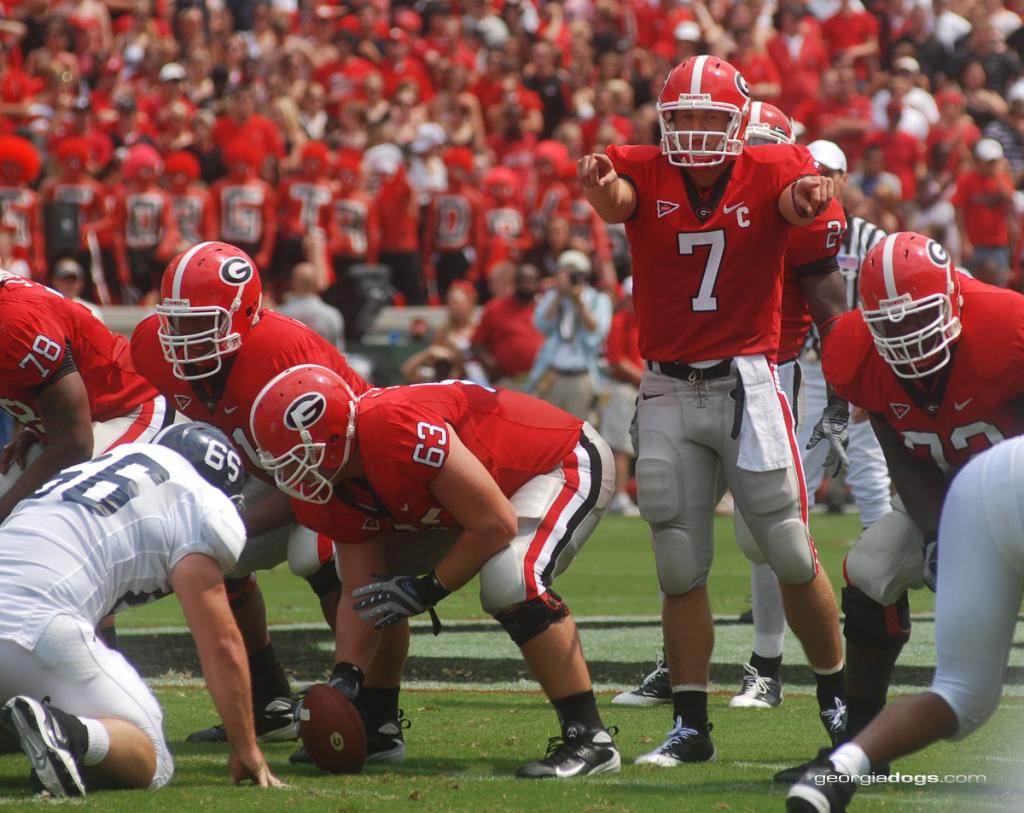
Can’t say how good it is to have college football back. Can’t say how bad it is not to be able to see the first game -thank God for radio and Larry Munson! As expected the Dawgs beat Georgia Southern, but more than that is the expected ethos – the feeling – of college football. Saturdays now have even greater purpose and a place that felt so good last year is now back like an old friend gone on an extended vacation.

Don’t want to get too sappy so “Time out”. Check out your life and try to identify the different “ethos” you experience. What is the ethos of work, family, church, school, etc? If you like it, great, relish it and enjoy it. If you don’t, think of ways you can transform the ethos to be one that feels like a comfortable T-shirt. Don’t think that because you aren’t “the Boss” that you can’t change the feel of your workplace. Every time you change something about yourself, you change everything about your relationships with colleagues, friends and family.

GO DAWGS!

“21”

Posted August 29, 2008 by Chris
Categories: Awareness, Creativity, Influence, Life

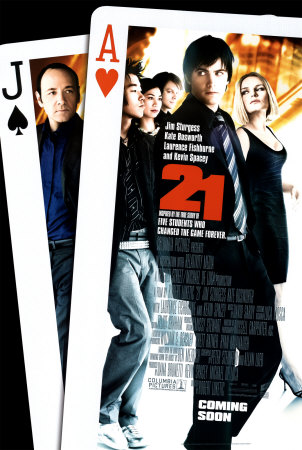
Tonight I finally saw the movie “21” with Kevin Spacey. I had heard a lot of things about the movie – mostly positive. It ended up being a good movie. The plot was well delivered, although at points it was predictable. The setting of Las Vegas was great as well – you can’t go wrong with Vegas!

What struck me was a line by Spacey’s character Mickey. After the group of MIT students had perfected a strategy, Mickey says to the main character, who is still a little nervous and stressed, “just let the car ride itself”. The idea that we need to enjoy the success of strategies that are working is something that I know I struggle with. It is not easy to “let the car ride itself” because I want control of it.

The reality is that the only control I have is merely an illusion of control.

Once you have done all that you can, sit back and enjoy the ride. It will be thrilling and sometimes scary and probably won’t end up how you thought. However, you will have stories and memories that would not have existed if you had not tried. Each moment we are creating experiences and memories that have not existed before. Instead of letting them happen, take part in the creation of those experiences – take part in creating your future!

Archaic Furniture

Posted August 28, 2008 by Chris
Categories: Awareness, Belief, Context, Creativity, Cultural Ideas, Goals, Influence, Leadership, Life

In Dee Hock’s, Birth of the Chaordic Age, an intriguing book, he mentions that:

“The most difficult part [of forming a chaordic organization] is to understand and get beyond the origin and nature of our current concepts of organizations; to set them aside in order to make space for new and different thoughts. Every mind is a room filled with archaic furniture. It must be moved about or cleared away  before anything new can enter. This means ruthless confrontation of the many things we know that are no longer so.”

This is such a profound and illuminating idea. Even scripture, with the parables of Jesus, compares our bodies as temples and houses. Being aware that something needs to be done is the first step, but then the moving or removal of mental furniture begins the real process of transformation. As Dee says later, a purpose must be agreed upon to direct the renovation. This purpose, both personal and professionally, has incredible importance in the “next steps” we take. It’s not something we spend five minutes on and then move – instead it can take much longer. Like other things in life it also is not static. There will be times when it will need reevaluating as well. This process is ongoing without ever arriving at a destination, but the result is a life fully lived and, as Jesus said, “more abundant”.

Personal Platform

Posted August 27, 2008 by Chris
Categories: Awareness, Belief, Creativity, Influence, Life

We are in the election season in the United States. This means that we have primarily two parties, who each have a nominee for President of the United States. The way we know what these nominees believe and what they plan to do is by their “platform”. In each acceptance speech the nominees will list each “plank” of their platform. Subsequently, they will go all over the country and try to explain the differences between them and their opponent.

We are all used to this during election seasons, but what about yourself, what is your Personal Platform? What are the things that make you tick and cause your emotions to soar? Have you ever thought about writing those things down? Once something is written and articulated it gives you a piece of solid ground – your ground – on which to stand.

When you hear a speech, you know when someone is speaking from a paper or from their heart. Learn to live your life from your heart. Only then can the true You shine forth unabated by the filters of others.

Be clear and concrete and state your platform in vivid, unequivocal terms that will inspire and motivate others. Then read it out loud to yourself. See if you don’t feel a bit better and the future a bit clearer!

Emotional Intelligence

Posted August 25, 2008 by Chris
Categories: Awareness, Context, Creativity, Lifepoint, People

No, this is not a review of Daniel Goleman’s book Emotional Intelligence. The book is a great one that brought to the forefront the importance of emotional intelligence in the work place. His later book Social Intelligence is a few books down in my “Need to Read” stack, so you will be hearing about it in a future post. You can read his blog here.

This look at emotion comes from a meeting the staff had with Transformational Architect, Ron Martoia. During several hours the concept distilled the most was that emotional health in relationships is far more important than technical skills, knowledge, talent and ability to success in a working environment. The level to which emotion plays a part in interactions and the decision-making process is astounding. The way we continually do the same things emotionally expecting different results is equally as astounding.

Thankfully, we are not stuck in an emotional mud-bank. We each have what we need to cause personal and professional momentum to increase and, in turn, to increase the positive momentum of any organization we are a part of. Far more can be said than I would want to post, but the key is that whatever emotional position you are in now, you are not destined to stay there. You do have a future to be written that contains emotions full of health that help to propel you toward a great preferred future that you write.

If you have some specific questions about this topic, ask and we’ll see where it goes!

Pillars Part 4

Posted August 23, 2008 by Chris
Categories: Awareness, Centering Prayer, Context, Message Series, religion, Rhythm

This week we talked about prayer as a discipline. For me, during the past few years I have run the gamut between prayer needing to be a fixed point in my schedule to wondering that if God is in control – what is the real point of prayer at all. I’m certain that you’ve thought about the idea of prayer and wondered if “you had it right” or whether you could “do it” at all. Prayer is such an enigmatic topic that many times we chose not to dive into it. We wait for priests, rabbis, imams, pastors or teachers to tell us “what it is”. Here is the interesting point, those guys you are waiting to tell you what prayer is often have the same struggle defining it and practicing it.

Loved the discussion about prayer we had Sunday. If you missed it you can hear it here. One of the aspects I want to just touch on is Centering Prayer. The idea was brought into prominence by Father Thomas Keating several decades ago. In a simple nutshell, centering prayer is about sitting and allowing the thoughts in your mind to pass by unattached to you. Think of sitting by a stream. Carried by the current of the stream are the thoughts that are passing through your mind. Consciously let them pass by. It takes effort. but eventually the number of thoughts will decrease and the static/noise level in your mind will subside.

Doing this for just twenty minutes can have a dramatic difference in your day. I know you may be saying that if I’m praying I should be saying something. This is one of the misconceptions we have with prayer. Think of a situation where you asked an opinion about something and your inner thought was your true feeling, but you said the opposite. Our true self resides within and can be heard when we sift through the myriad of brain chatter that vies for our attention each day.

Try each day to visualize yourself for a few moments at the streams edge and watch the thoughts go by and dissipate. This is the “centering” part of centering prayer. Just like everything else in our lives, practices that have the greatest amount of impact take time and effort to learn and become part of our daily rhythm.

Hauerwas quote

Posted August 22, 2008 by Chris
Categories: Awareness, Belief, Context, Kingdom of God, religion

Stanley Hauerwas is the Gilbert T. Rowe Professor of Theological Ethics at Duke Divinity School. Throughout his career, he has focused emphasis on the importance of virtue and character within the Church. I found this quote and it embodies what I feel the church is to be.

“The work of Jesus was not a new set of ideals or principles for reforming or even revolutionizing society, but the establishment of a new community, a people that embodied forgiveness, sharing and self-sacrificing love in its rituals and discipline. In that sense, the visible church is not to be the bearer of Christ’s message, but to be the message.”

This is such an important ideal to grasp – especially as we near the hard and heavy election season. Christians are best, not when they seek to infiltrate society and bend it to their will, but when they seek to embody the character of Christ.

Unconditional Love

Posted August 19, 2008 by Chris
Categories: Belief, Context, religion

I’ve had a question bouncing about in my mind for several months. My point here is not to answer the question or even come close to a few conclusions. What I want to do is offer this question as a beginning place in rethinking what it may mean to be a follower of Christ.

In regard to our proclaiming of a God who loves us with an unconditional love, we seem satisfied to only be able to receive this unconditional love after we have met the condition of (depending on faith) asking, believing, confessing, baptizing, etc. In it’s basic Sunday School representation there appears to be contradiction. Just as one is either pregnant or not (there is no “kind of pregnant”), you either love someone conditionally or unconditionally. In light of this, how does that effect the Biblical narrative we have been offered by previous generations and are offering to the next generation?

After all, this is the basis of our emotional connection with God. If we buy into the concept of a conditional loving God, fear of not measuring up becomes a primary posture in relating to God. If we buy into the concept of an unconditional loving God, performance barriers are gone.

So, what has been the full context of your view of God’s love and how has that colored your perception of God and your own potential? How crucial is a consistent “seeing” of God’s actions and motives?

How?

Posted August 16, 2008 by Chris
Categories: Awareness, Books I'm Reading, Creativity, Cultural Ideas, Goals, Influence, Starting, Vision

Normally I wait until I’ve completed a book to comment on it, however Peter Block’s “The Answer to How is Yes” has got my mind on overdrive – and I’ve just passed the first chapter. He suggests that the question “How?” could be more of an obstacle rather than a help to an end. He uses “How?” as a symbol because it is the most frequently asked question following critical conversations about changing directions in our jobs and lives. Coming to the decision that something should be done is often easy. The raising of the question, “How?” inevitably leads to a halt in progress until we have some perceived certainty.

One of the best observations I’ve read yet is when Peter says that, “if we were really committed to the pursuit of what matters, we might well be served to hold a moratorium on the question ‘How?’…If we could agree that for six months we would not ask ‘How?’, something in our lives…might shift for the better. It would refocus our attention on deciding what is the right question, rather than what is the right answer. It would force us to act as if we already knew how – we just have to figure out what is worth doing.”

What is keeping you from pursuing something that has captivated your mind? Removing the question “How?” from the conversation leaves us with only a decision to decide what matters most. Think about your life and after evaluating what matters most, make it a priority to take the first step toward seeing that “thing” happen.