Archive for the ‘Context’ category

Michael Collins and St. Patrick

March 17, 2008

michael-collins-film.jpg

I just watched a movie entitled, Michael Collins. I have to admit that I did not know who this guy was – I knew about Tom Collins, but not Michael. I had to jot a little down in honor of our Irish brothers and sisters.

This movie was great. Liam Neeson, Aidan Quinn and Julia Roberts and lots of blowing up bombed buildings. Aside from those noteworthy items, the story is really amazing. Afterward, you can’t help but have an overwhelming “aha” at the events that occurred just a few years ago in a very modern country.

Toward the end, you also appreciate the place that sheer luck has played in the course of human history. With the Irish Republic down to mere weeks before they have to give up, the greatest Empire of the time bows a knee and offers them freedom. Certainly it would be many more years before both parties agreed on the form of that freedom and the nation who enjoyed it, but that first step was undoubtedly given a divine boost.

It gives us hope that even today, seemingly insurmountable odds can be turned on their heels and amazing outcomes become the result.

Checklist

March 14, 2008

checklist.jpg

This may seem like a mundane word, but it provides access to some amazing and interesting bits of food for thought. The biggest point to make is that to avoid blind spots institute checklists.

Hospitals use checklists to save lives every time they insert an IV line. Checklists give people the best way to do things – a clear cut “right way”.

In any business we do certain things over and over. Through the passage of time a certain amount of overconfidence can cause us to do things without thinking – think of the rate of auto accidents near to home; a route we take over and over and soon do as second nature.

Even when we do institute an actual checklist in situations we have to be wary of checklist creep. We have to discipline ourselves not to short change a working system.

To be candid, when we use checklists we make fewer mistakes. We all have things we do over and over again.  Take these things and put them in checklist form. This is the one sure fire way to eliminate at least some of the blind spots we all share.

Life In Context

March 13, 2008

We often find we have a lot of people giving a lot of options as to how our life should be lived. Many do this because they are convinced that they “have our best interest” at heart, or that they have a better perspective of our life from “outside”.

I will be the first to say that having input from trusted people is a must in our lives, especially when you are in a position of leadership and given influence. That being said, these people are not random – they are chosen because of their knowledge of you as a person and leader. They have the ability to sift through personality to character.

We all have different personalities. I’ve worked with people who were very meticulous in their approach, but I’ve also worked for guys who were anything but hands-on. Those are personality differences. Anger issues and control problems are something entirely different.

I’ve been chewed out during a service on the platform and maintained a smile, but it was a point of evaluating that there existed a character issue that would not be solved by simple discussion. I’ve also asked that communication about service information be handled better – this is a personality issue, and was solved quickly and painlessly; the former situation resulted in my leaving a place of employment.

In every position and situation, self honesty is the most important thing to keep front and center. You are living your life and ultimately it will be you who literally lives with the results of your decisions. Input from others is great and necessary, but that input cannot run your life and make decisions for you. Weigh your choices and go with what you know is right for you at that time. Only then can you weather criticism and praise and come through either with confidence and a level head – both of which seem to become more rare the further up the leadership pipeline you go. 

Knowing When to Say “When”

March 6, 2008

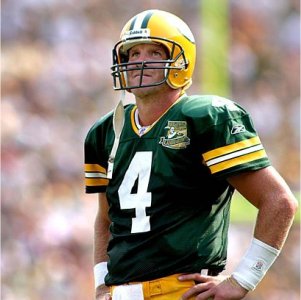
brett_favre.jpg

Well, it finally happened. Brett Favre has retired. Only time will tell if it is permanent, but from what I’ve seen, it looks to be the end of an era. Knowing how to stop is just as important as knowing when to begin. Before there are book out about how he should quit,  how he has played beyond his time or how his staying in the game has brought his team down, Brett has chosen to step aside.

There will be plenty of people who will want to find a “reason” why. They will point to him being pushed out by Green Bay, how that “had” to be how it happened – I don’t think so.

Brett is one of my favorite guys in professional sports because he is grateful to what the sport has meant to him, but he is not over enamored by his own mythology. I doubt we will see him quickly step up to become a commentator on a network like others have done.

I like Brett because he seems to be more at home in Mississippi than in Green Bay. He is talented – no doubt to that – but the talent hasn’t made him into an egomaniac. He presents an example to all of us who seek to do “great things”.

When we achieve those “great things” fame is often thrust upon us, but the true revelation of a persons greatness is not in the things they have done, but in the way they respond to greatness. If you have not prepared as to how and what you will do when greatness comes, the onslaught of fame can become a curse.

Always remember that famous people are not often truly great, and truly great people are not often famous, but when the two converge you often have a modern iconoclast – someone who leads by breaking the mold and exhibiting facets of character that transcend the normal and pave the way to a new definition of what it means to be great. 

“Hold on Loosely”

March 4, 2008

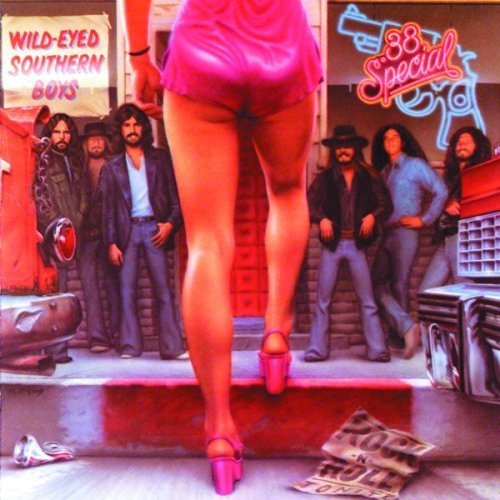
wild-eyed-southern-boys.jpg

38 Special had a song on the 1980 album, Wild-eyed Southern Boys, titled “Hold On Loosely”. I heard this song on the radio a few days ago and it has stuck with me. If you’ve been reading the blog, you know that one of the areas I am drawn to is the connection between traditional Christianity and its transition into the post-modern world. Specifically, the way that certain aspects of the religion are being augmented, jettisoned or distinctly transformed from their pre-modern, Enlightenment Era definitions.

This song describes, for me, the context with which we must hold all religious beliefs. In one part of the lyrics the song says, ” Just hold on loosely, but don’t let go / If you cling to tightly, /you’re gonna lose control.” Definitely a thought worth pondering in relation to religion and the give/take struggle we often face.

We must hold on to our beliefs, but not so tightly that when it becomes apparent our beliefs contradict truth and reality we find it difficult or impossible to let go.  This is not to say that faith has no place – it certainly does – but only when the faith is based on truth. So-called “blind-faith” is no faith at all.

Ben Franklin

March 3, 2008

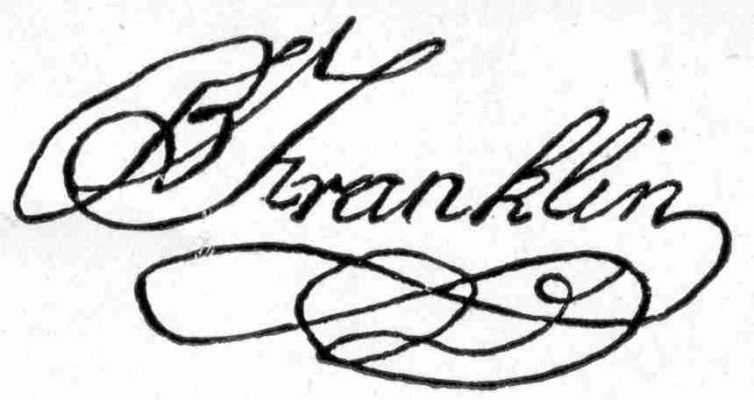
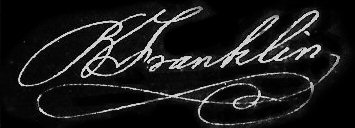
signature.jpg

“The sting of rebuke is the truth.” These words were spoken by Ben Franklin and could not be more true today than they were back in the infancy of the American nation.

Rebuke is something none of us like. To be told we are wrong offends our ego and bruises our pride. However, like Franklin stated, when the comments carry the ring of truth, their pain seeps deeper into our being. We know our own mistakes and hidden failings; and often seek out ways of burying them in the dust of time. When a fault or character flaw – specifically one we thought we had dealt with – is pointed out by a friend or colleague, there is a pain that defies explanation.

The true response can only be honesty at our personal lack and a resolve to continue working on the issue or problem. The great thing about we humans is that we were not created perfect, nor can we be. As the saying goes, “to err is human” is correct. Our imperfections display our beautiful humanness.

Ben had his own issues, but we still choose to remember him as a great American statesman. If you fail, choose to remember the “great” things about you, and if someone close to you fails, choose to remember and help them to remember the beauty of our frailty and their “great” moments as well. 

From Center to Side

March 2, 2008

0401.gif

Once upon a time the very center of the idea of Christianity was to “get to Heaven”. Books were written, messages preached and people have actually died on the premise that this idea of getting into Heaven was the center of the gospel.

The institution of Christianity is currently undergoing a broad evolution in terms of the concepts that have drifted from center to side and those that were either on the side or not on the grid at all moving to center.

The concrete idea of “Kingdom” is moving to center in many places on the landscape of Christianity. This is different than the Kingdom Now movement of a few years ago. This current idea has a foundation of experiencing the fullness Christ promised in living this life. There is an intense focus on “being” Christ to the world. The areas that are leading in influence and the areas that are being influence by global culture tend to be areas that “mainline” denominations would not typically be associated with.

This has to be separated from the Emerging or Emergent church. There are many “white steepled churches” that are actively involved in bettering their community and taking lead roles in the “greening” of their towns and cities.

The key, and I talk a lot about this, is that this process is not stopping and hasn’t stopped. In the future the things that we have placed in the center of our belief will be replaced by things that are being placed on the sides today.

The essence is that this great fermenting of Christianity is a living activity, and as long as we are having conversations about what belongs in the center and what should be moved to the side, the dream of the community of Christ is still going strong. 

Leap Day

February 29, 2008

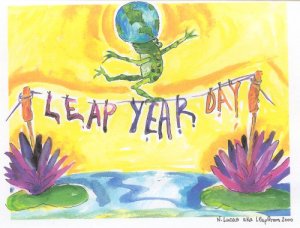
clothesline.jpg

Got a note from my brother-in-law and had to convey the idea. It has to do with “Leap Day” an aditional day added to bring balance to the calendar. His point was that we all need to incorporate the idea of a “Leap Day” concept in each of our lives.

This is a great idea and a good wake up to those of us who have difficulty turning work off at the end of the day or on the weekend. We need balance in all of our relationships and connections. 

God Is a Salesman

February 28, 2008

mark_large1.jpg

Picked this book up a few days ago and started  to read. The concept is centered around the fact that in a world where we need proof and trial studies and perfomance data, we take the idea of a God without any of these things.

The author’s point of view is that for God to be able to have that many followers with so little in the way of actual “stuff” to show, God has to be the best salesman out there. Since in our lives we find ourselves always selling something, we should take some pointers from God and let the observations influence the way we live and express our lives.

I’m about halfway through and have to say that I am enjoying the book. It’s not a blockbuster, but it’s small size gives you the “light at the end of the tunnel” to keep you motivated to finish.

I intend to utilize many of the ideas listed in the book.

Where Do We Go From Here?

February 27, 2008

question_maze.jpg

Currently I am involved in several different conversations concerning issues related to religion, philosophy and culture. I have to assume that I am not the only one. It seems to me that there would be many more who would be entertaining conversations centered around religious, philosophical or cultural issues. The big question is “What then?”. What do you do in the aftermath of a particular conversation that leaves you reeling?

Obviously simply because we may differ on different subjects and issues, I nor you would change a held opinion based on one dialogue – difficult or not. I think it is important to hold onto our beliefs and opinions somewhat loosely, perhaps I’ll discuss that idea in a later post, but for the time being we should look at the basic foundational architecture of our belief systems. If we view our beliefs unedited by personal preference, it is possible that we may learn to take and add intrinsically useful ideas and concepts to our “repertoire of belief”.

In other words, when ideas that seem to be diametrically opposed to your current faith path, don’t be too quick to dismiss them – they may find a permanent lodging and become a great source of help and inspiration.